Why CEO success relies on removing ego
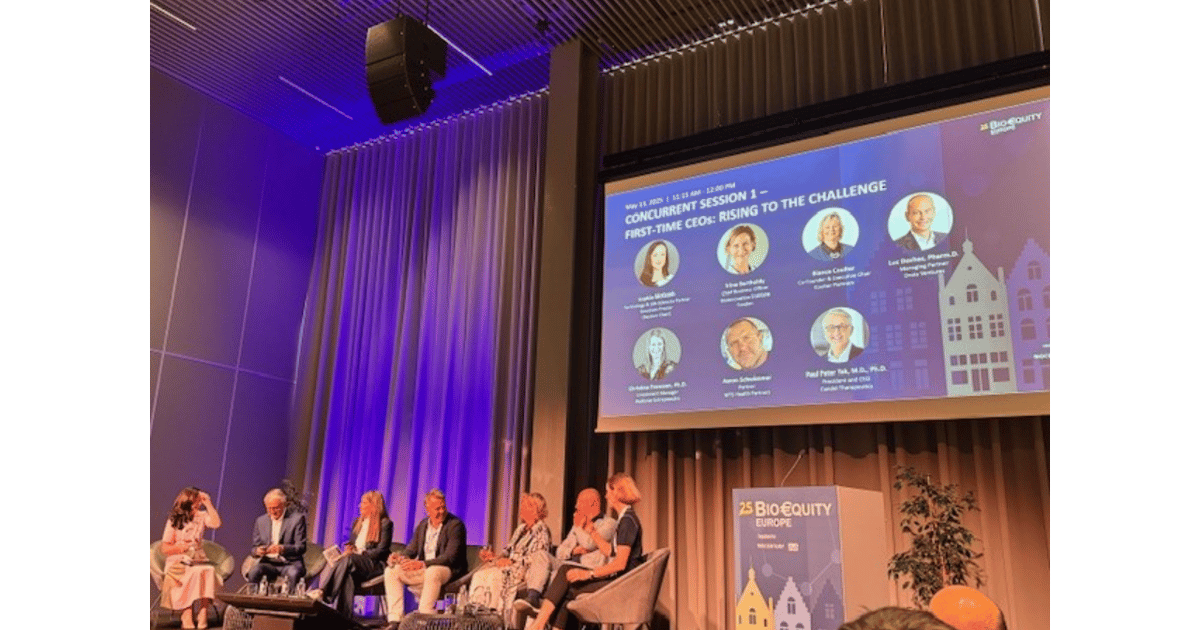
In the high-stakes world of biotech leadership, a panel of experts at BioEquity Europe in Bruges, Belgium, discussed the importance of actively seeking to hire people more talented than themselves and how this contributes to the learning process. This insight challenged the traditional notion of leadership and ego-driven management.
“The key role for the CEO as I see it and have learnt it is to advance the value creation roadmap,” Paul Peter Tak, CEO of Candel Therapeutics said. “It is critical to bring the right people into the company because you cannot do it alone. Create a high performing team, focus on the right culture, and work in the right way with the board.”
According to Tak, part of finding the right team is pushed by the need to bring people onboard with diverse leadership styles. Consequently, this enables the acting CEO to bring people in to “compensate for your weakness.” He urged the audience to “be very deliberate about that” and said this approach can create strong, high performing teams where constructive conflict becomes a feature rather than a flaw.
Removing the ego
The practice of hiring superior talent challenges the conventional hierarchy seen across various industries. However, Trine Bartholdy, chief business officer at BioInnovation Institute Fonden (BII), maintained that effective leaders recognize “they are no longer the expert” in the room and are willing to seek advice and build “constantly on capabilities.”
The perspective was reinforced by Bianca Coulter, co-founder and executive chair of Coulter Partners, who observed that first-time CEOs must quickly build strong teams, often including individuals with significantly more experience than themselves. While she acknowledged this can be “quite a frightening thing,” she maintained this is an essential component required for growth and success.
Christina Franssen, investment manager at Wallonie Entreprendre, reflected on her previous role as CEO of a spinout from academia. She noted that while first-time CEOs often feel threatened by hiring more experienced professionals, surrounding yourself with superior talent is precisely what strengthens leadership positions. This is particularly relevant in biotech startups, where the panellists pointed out that founders transitioning from the laboratory to the C-suite level endure steep learning curves in business management.
link