What changes most for CFOs when they become CEOs?

For CFOs who eventually step into the CEO role, the transition often develops quietly. It begins as finance leaders become more involved in strategy, capital allocation and board conversations.
However, over time, the work that demands the most attention shifts. Questions move from explaining results to shaping outcomes and from validating decisions to setting direction. For some CFOs, this shift becomes persistent enough that the CEO role feels like the next necessary step.
As the CFO role has expanded, the path to CEO has become more visible. Many finance chiefs now operate as strategic partners with broad organizational exposure. Yet executives who have made the move say the transition is not automatic. While finance skills travel well, the nature of the job changes in ways that require preparation, self-awareness and a willingness to let go of familiar forms of control.
Setting direction and owning momentum
One of the first adjustments former CFOs describe is how responsibility shows up once they become CEO. CFOs often function as partners who refine plans, test assumptions and help keep execution on track. As CEO, these leaders say the role shifts toward defining what matters before those plans exist and sustaining momentum once direction is set.
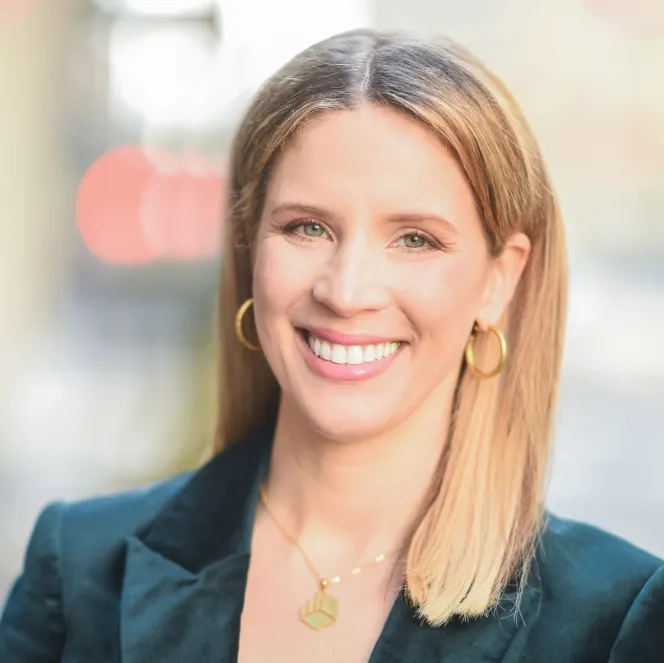
Christina Ross
Permission granted by Christina Ross
Christina Ross, a former three-time CFO and founder and CEO of FP&A software provider Cube, said that realization became clear while she was still interviewing for CFO roles. During those conversations, she found herself increasingly drawn to the work of defining a company’s direction rather than operating within an existing framework.
“I started interviewing for a couple of CFO roles, and as I sat across the table from other CEOs and founders, I found myself becoming more interested in their jobs,” Ross said. “I didn’t want that job I was interviewing for. I wanted the role of the person who was sitting across the table from me.”
That moment often serves as an early signal of readiness. For CFOs, the pull toward the CEO role tends to show up less as dissatisfaction with managing the finance function, but satisfying a sustained curiosity about leadership decisions they do not own. The interest, though similar in nature, shifts from evaluating options to determining which questions should be asked in the first place.
“I started interviewing for a couple of CFO roles, and as I sat across the table from other CEOs and founders, I found myself becoming more interested in their jobs.”

Christina Ross
CEO of Cube
Once in the CEO seat, that shift becomes real. John Baule, who has over 20 years of international CFO experience across multiple industries and is now the CEO of FP&A software provider FutureView Systems, said the difference is immediately apparent in how decisions are initiated and carried forward. He said that today, CFOs spend much of their time responding to requests and coordinating across teams. And, according to him, CEOs must identify priorities before anyone asks and ensure the organization stays aligned around them.
“A good CFO plays that role broadly,” Baule said. “It’s like a point guard in basketball. Your job is primarily to get the ball to the right person at the right time.” As CEO, Baule said, that orientation changes. The responsibility expands to owning outcomes and ensuring progress continues even when conditions are uncertain.
“When you get to be the CEO, you’re taking a lot more shots,” he said. “A lot more people are feeding the ball to you, and you’ve got to make it.”
That ownership also carries an energy component. Baule said momentum depends heavily on the CEO’s engagement, particularly in growing organizations where priorities shift quickly. “You contribute more of the energy,” he said. “If you stop, nothing will happen.”
Leading people, risk and belief
Former CFOs say the CEO role quickly becomes centered on people. Where finance leadership emphasizes discipline, accuracy and risk awareness, CEOs must focus on alignment, motivation and belief across the organization. That shift changes how risk is experienced.
As CFOs, risk is managed through models, controls and contingencies. As CEOs, former CFOs become the sponsors of decisions that cannot be fully modeled in advance. They are accountable not only for outcomes, but for the confidence required to move forward without complete certainty.
“When you get to be the CEO, you’re taking a lot more shots,” he said. “A lot more people are feeding the ball to you, and you’ve got to make it.”
John Baule
CEO of FutureView Systems
Ross said she initially underestimated how much leadership would involve repetition and active engagement. Clear plans and strong hires were essential, but they did not remove the need for constant reinforcement.
“I thought I would set this clear, beautiful vision, hire wonderful people and let it play out,” she said. “What I didn’t realize was how much pushing there would be. There’s a constant reinforcing of the vision, communicating it and pushing people to be their best selves.”

John Baule
Permission granted by John Baule
That emphasis on belief extends beyond internal leadership. Baule said selling becomes a central part of the CEO role, regardless of industry or company size. He noted that CFOs are accustomed to evaluating proposals, and great CFOs turned CEOs must use that experience to persuade customers, investors and employees that the company’s direction is worth committing to.
“As a CFO, people sell to you all the time,” Baule said. “As a CEO, you’re selling.” That selling often comes with rejection. Baule said adjusting to that reality is part of the transition. “You get more rejection as a CEO,” he said. “You get used to it.”
Jack McCullough, president of the CFO Leadership Council, said this shift reflects broader changes in leadership expectations. CFOs build credibility through accuracy and insight. McCullough has spoken and written extensively about the CFO-CEO transition and has plenty of finance leaders in his organization’s network who are looking to or have already made the transition to the top spot. He says part of the reason the transition can be fairly seamless is that, like CFOs, CEOs must also generate alignment across diverse stakeholders, including boards.
“CFOs are used to being right,” McCullough said. “CEOs have to be compelling.”
McCullough said the CFO-to-CEO transition works best when finance leaders accept that judgment increasingly matters more than precision, particularly in periods of rapid change.
Applying finance discipline at the enterprise level
Former CFOs also face decisions about how closely to remain involved in finance operations. Most say stepping back from day-to-day execution is necessary, even when finance remains a personal strength.
At Cube, for example, Ross doesn’t even have a traditional CFO. Instead, she promoted a head of finance internally and structured the role around strategic communication. Financial discussions emphasize narrative and decision-making rather than reports.
“[My head of finance] starts every financial presentation with just bullets,” Ross said. “Here’s what happened, here’s what it means and here’s what we need to decide next.”
Ross said her finance background now shows up more in how the company operates than in the numbers themselves. She remains closely involved in setting the operating cadence and maintaining accountability across teams.
“I’m the keeper of the calendar,” she said. “What gets scheduled gets done.”
McCullough said this approach reflects how finance leaders create value at the enterprise level. CFOs who succeed as CEOs understand how financial discipline multiplies impact across the organization rather than sitting within the finance function alone.

Jack McCullough
Permission granted by Jack McCullough
“The CFO role has evolved into a deputy CEO function,” McCullough said. “You’re often the only person who combines deep financial expertise with strategic thinking.” That combination positions CFOs well for the CEO role at a time when leadership increasingly depends on discernment rather than mastery.
McCullough said comfort with ambiguity has become a defining trait. “Expertise still matters,” he said. “But judgment and discernment matter more.”
For CFOs considering the move, executives who have made the transition emphasize preparation over timing. Exposure to fundraising, experience leading beyond finance and comfort making decisions without full certainty all contribute to readiness. Ross said the transition reinforced the value of skills developed earlier in her career, including delivering difficult messages and maintaining discipline under pressure.
“A lot of people say the CEO role is the loneliest job,” she said. “I think the CFO job can be lonelier,” she said.
As organizations face faster decision cycles, evolving technology and greater uncertainty, the overlap between CFO and CEO capabilities continues to grow. For finance leaders willing to adjust how they lead, the transition can extend their impact beyond finance and into the direction of the business itself.”
link